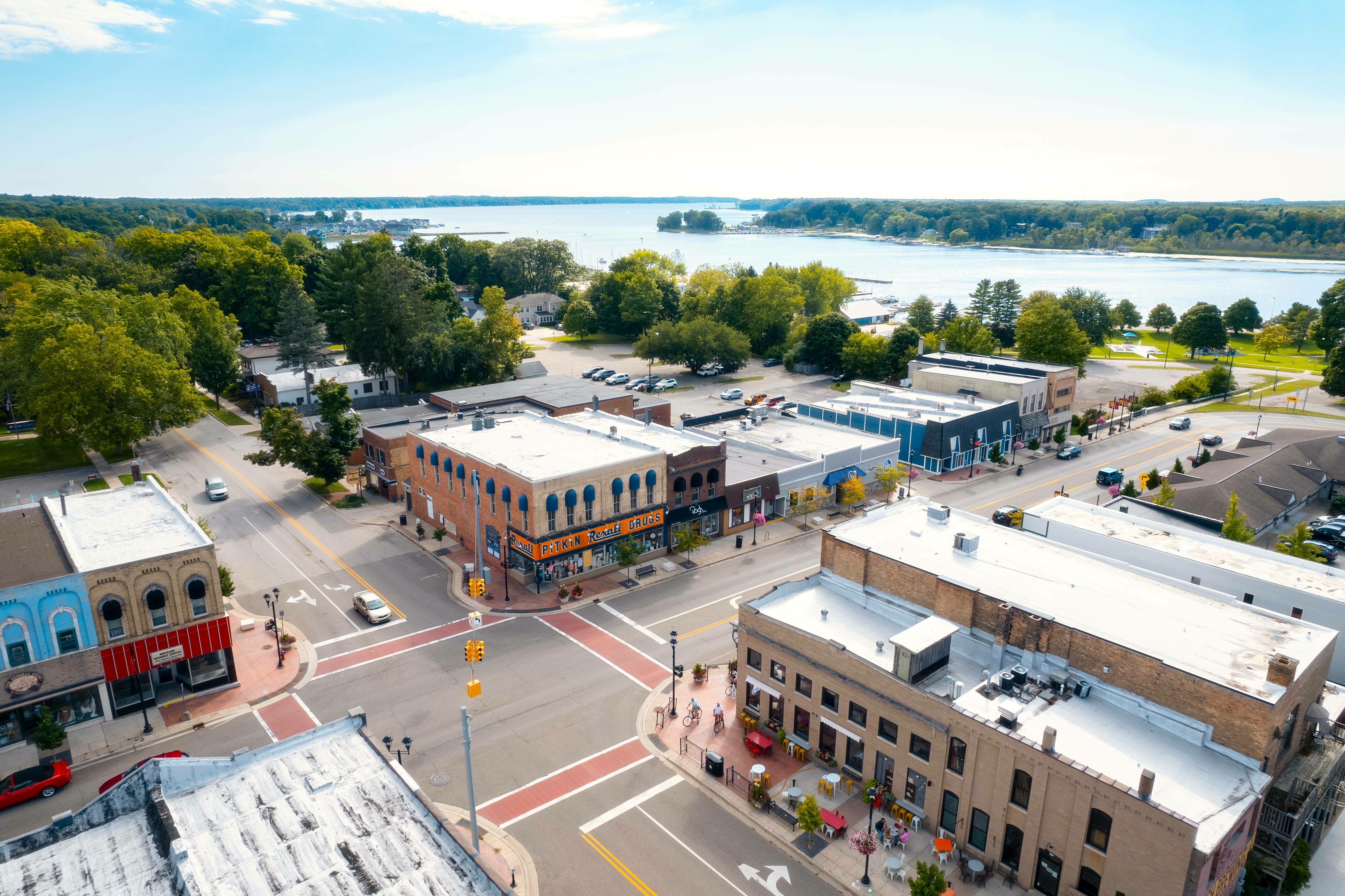
What makes Whitehall & Montague different from other West Michigan towns?
If you have spent a few weekends comparing lakeshore communities, you have probably noticed that each one has a distinct personality. Some run hot in summer and go quiet in winter. Some are built around visitor traffic first and residents second. Whitehall and Montague, the two towns that share White Lake, tend to read differently. The pace is calmer, the character is more established, and the area feels lived-in year-round rather than switched on for the season.
That is the difference most buyers are responding to. Not more. Steadier.
The Pace Is the First Thing You Notice
Buyers usually feel it before they can name it. Traffic is lighter. The downtowns of Whitehall and Montague are easy to move through. The marinas stay busy without feeling crowded. For relocators and second-home buyers coming from Chicago, from Indiana, or from the Detroit and Grand Rapids suburbs, that slower rhythm is not a downgrade. It is the entire reason they are looking here.
There is also less of the keep-up energy that some resort markets carry. The White Lake area does not ask you to constantly be part of the scene. People settle in, and they tend to stay.
It Runs on Community, Not Tourism
The clearest sign of the difference is how local the area still feels outside of peak season. Residents fill the seats at the Playhouse at White Lake, the historic 1916 theater in downtown Whitehall that reopened in 2019 after a full restoration. Families follow the Whitehall and Montague school calendars. The coffee shops, the library, the parks, and the marinas stay in use in February, not just July.
Outdoor life works the same way. It is tied to the community rather than packaged for visitors. The William Field Memorial Hart-Montague Trail State Park, Michigan's first paved rail-trail, runs north out of Montague and is part of the everyday routine for people who live here. The channel out to Lake Michigan gives the area a genuine boating identity without turning the whole community into a tourism engine. That balance is harder to find on the lakeshore than buyers expect.
Residential First, and It Has Stayed That Way
A lot of West Michigan lake towns are built around short-term visitors. Whitehall and Montague still read as residential first: quieter neighborhoods, fewer large commercial strips, established streets with mature trees, and businesses aimed at people who actually live here.
This is also where the word refined fits, and it is worth being precise about what that means in the White Lake area. It does not mean flashy. It means considered and well-kept. The restored historic Playhouse, the preserved downtowns, the established waterfront neighborhoods, these are signs of a place that has protected its character on purpose. Holland, Saugatuck, and Grand Haven are excellent towns, and they are busier and more commercialized by design. The White Lake area is the quieter, more private version of the same lakeshore. For buyers thinking in terms of a generational lake home rather than a quick purchase, that preserved, investment-quality character is the draw.
Two Towns, One Lake, Your Choice of Pace
Part of what makes the White Lake area work is that buyers can choose between two slightly different environments without leaving the community.
Whitehall tends to feel more walkable, more downtown-oriented, more marina-connected, and a little more active day to day. The full picture is in living in Whitehall.
Montague tends to feel quieter, more residential, slower paced, and more tucked into the natural surroundings. The deeper look is in living in Montague.
The two are connected by the causeway across White Lake, so most buyers spend time on both sides before deciding which pace fits them. That is the right instinct, and it is exactly why those two articles exist.
So What Actually Sets the White Lake Area Apart?
Balance. You still get the waterfront lifestyle, the marinas, the boating, the trails, real downtowns, and a full community calendar. But the pace is calmer, the character is more established, and the area has held onto its identity instead of trading it away. For buyers who want the West Michigan lakeshore in its quieter, more private form, that is the whole answer.
If you are weighing the White Lake area and want a clearer read on the differences between Whitehall and Montague, waterfront neighborhoods, or what year-round life actually looks like here, reach out for a White Lake area conversation.
About the Author
Tamara Hekkema is a Realtor with Greenridge Realty covering West Michigan, with a focused specialty in the White Lake area, including Whitehall and Montague. She works primarily with waterfront and second-home buyers and sellers, and publishes regularly on the local market.
Quick Recap
Whitehall and Montague feel quieter and more refined than many nearby West Michigan lake towns
The area runs on year-round community, not seasonal tourism
Outdoor recreation here is part of daily life, supported by the Hart-Montague Trail and the channel to Lake Michigan
The towns have protected their residential, established character on purpose
Whitehall and Montague offer two different paces within the same lake lifestyle
Read Next
Is Whitehall, Michigan a Good Place to Live? for buyers leaning toward the more walkable, downtown side
Is Montague, Michigan a Good Place to Live? for buyers drawn to the quieter, more residential side