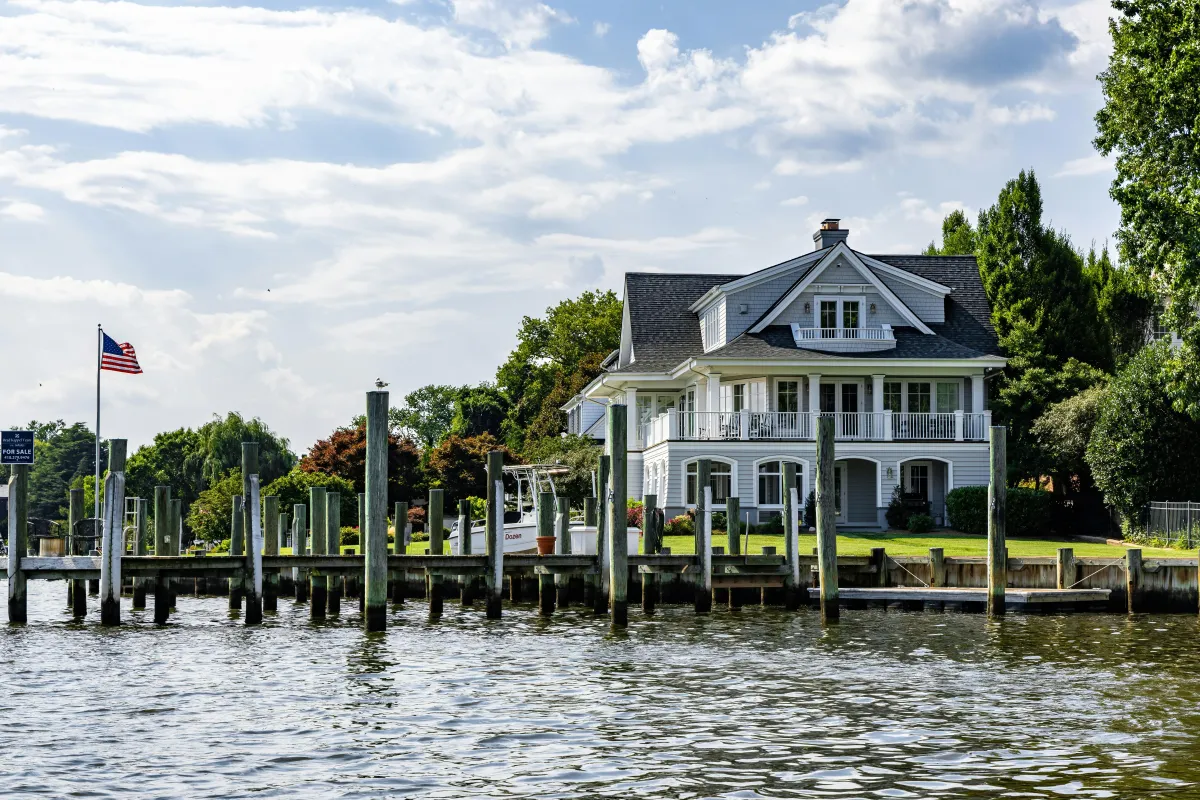
What You Need to Know Before Buying a Waterfront Home on White Lake
If you're driving up from Chicago or Indianapolis with a weekend property in mind, White Lake looks like the easy answer. It's calm water, real towns with year-round life, and a channel that opens straight to Lake Michigan. But a waterfront purchase here isn't like buying an inland house with a nice view. What the deed actually conveys, what you're allowed to build, and what runs the house behind the walls all matter more than the listing photos suggest. Here's what I walk every buyer through before they write an offer
The short version: three things decide a White Lake waterfront purchase. What the deed actually conveys (true riparian frontage versus shared access), what Michigan EGLE lets you build at the water, and the home's well and septic. Get those three right and you're buying an investment-quality lake home, not a problem to inherit.
First, understand the lake itself
White Lake is a 2,571-acre drowned river mouth in Muskegon County. It's connected to Lake Michigan by a federally maintained navigation channel, which is the detail that changes everything for a second-home buyer. You can keep a boat at your own dock, run the channel, and reach the big lake without ever trailering. For a family splitting time between here and a metro three hours south, that convenience is the whole point.
The scale matters too. At more than 2,500 acres, White Lake carries real boat traffic and real weather. Where a property sits on the lake, the depth off the frontage, and how exposed it is to wind all shape what your days actually feel like. Two homes a mile apart can be completely different buys.

Riparian rights: what you're really paying for
When people say "waterfront," they often mean two very different things. True waterfront, called riparian frontage, means your land actually touches the water. That ownership carries specific legal rights: use of the bottomlands out to the thread of the lake, the right to wharf out (install a dock), the right to moor boats, and reasonable use of the water itself.
Those rights are "correlative." That's the legal way of saying they have to be reasonable and can't unreasonably interfere with your neighbors or the public. You get real, protected use of the lake, but not a blank check. For most buyers that balance is exactly right, and understanding it up front prevents friction later.
Deeded access is not the same as private frontage
This is where I see out-of-town buyers get hurt. A shared "deeded access" arrangement or an access lot (often called a keyhole or funnel development) gives you limited, usually shared rights to reach the water. That is not the same as owning private frontage. The listing may say "lake access," the photos may show a dock, and the price may look like a bargain, and none of that tells you what you actually own. Before you fall for a property, verify what the deed conveys. Private frontage and shared access are different assets with different values and different futures. This one issue is the clearest example of specialist versus generalist representation on White Lake.
Permits: what you can and can't do at the water's edge
Michigan regulates work on the lake through EGLE (the Department of Environment, Great Lakes, and Energy) under its Inland Lakes and Streams program. The short version: a permit is required for a permanent dock or boat hoist, for any dredging or filling, for building a seawall, or for placing structures on the bottomlands.
The good news for most owners is that seasonal setups are usually simpler. Seasonal docks, hoists, and swim rafts for private, non-commercial use that come out at season's end generally don't need a permit, as long as they don't interfere with others or with water flow. If you're planning anything permanent, confirm before you buy or build. EGLE's information line is 800-662-9278, and it's a free call that can save you a lot of money.
What's behind the walls: well, septic, and setbacks
Many White Lake waterfront homes run on a private well and septic system rather than municipal utilities. That's normal here, and it's manageable, but it's not something to skip past. Test the water, inspect the septic, and understand the lakeside setback rules before closing. A failing septic near the water is expensive and, on a lake, it's also an environmental issue you don't want to inherit.
This is one place where a metro buyer's instincts don't transfer. City closings assume city infrastructure. Lakeshore closings assume you'll verify the systems yourself. Build that inspection time into your timeline from the start.
The water quality question, answered honestly
If you do any research, you'll find that White Lake was once a federal Great Lakes Area of Concern. Decades ago, leather-tanning and chemical-industry discharges damaged the lake. I mention it because you'll read about it, and I'd rather you hear it straight from me. Here's the rest of the story. After years of cleanup and restoration, the U.S. EPA officially delisted White Lake on October 30, 2014. Today it's a restored, healthy lake, and that recovery is a real part of why the shoreline is worth investing in now.

Quick recap
White Lake connects to Lake Michigan by a federally maintained channel, so you boat out without trailering.
Riparian rights come with true frontage and are real but correlative, meaning reasonable use only.
Deeded or shared access is not private frontage. Always verify what the deed conveys.
Permanent docks, seawalls, dredging, and filling need EGLE permits. Most seasonal, private setups don't.
Many homes run on well and septic, so test the water and inspect the systems before closing.
This article is general information about buying waterfront property, not legal advice. Riparian rights, easements, permits, and well and septic rules involve legal and regulatory specifics that vary by property. Confirm the details with a licensed real estate attorney, a licensed surveyor, and Michigan EGLE before you rely on them.
If you're thinking seriously about a place on White Lake, let's talk before you tour, not after you've fallen for a listing. I'll help you separate true frontage from access, read the permit picture, and buy something that holds its value as an investment-quality property, not just a pretty weekend. Your goals become mine.
Helpful official resources
About the author
Tamara Hekkema is a Realtor with Greenridge Realty and a waterfront and second-home specialist for Whitehall, Montague, and the West Michigan lakeshore. She works the difference between true private frontage and shared access every week, and she guides out-of-state buyers through permits, well and septic, and the details that decide whether a lake home is a generational one. Her focus is depth in one market rather than breadth across many, so buyers get a specialist, not a generalist.