The Hidden Costs of Owning a Waterfront Home on White Lake
Most buyers shopping White Lake are comparing purchase prices. That is the visible number. The number that actually shapes your experience of owning a waterfront home is the one underneath it: what the property costs to hold, maintain, and protect every single year. On the water, that figure behaves differently than it does on an inland lot three streets back, and the gap surprises people who have only owned in a city or a subdivision.
I sell on White Lake, the channel, and the surrounding Whitehall and Montague shoreline, and I would rather you walk in with clear eyes than fall in love with a view and get blindsided by the carrying costs. Here is the honest breakdown of what waterfront ownership really costs here, and where the money tends to hide.
Property taxes are not what the current owner pays
This is the single biggest surprise for out-of-state and second-home buyers. Michigan caps how fast a home's taxable value can rise while one owner holds it, but that cap resets when the property sells. The year after you close, the taxable value can uncap and jump to roughly half of true market value, so the taxes the seller was paying are often a poor guide to what you will pay.
On top of that, a second home does not qualify for Michigan's Principal Residence Exemption, the break that removes 18 mills of local school operating tax for a primary residence. If White Lake is your getaway rather than your full-time address, you pay the non-homestead rate, which is meaningfully higher on the same house. Waterfront parcels also carry higher assessed values per foot of frontage, so the effect compounds. I will pull the exact taxable value, millage, and non-homestead estimate for any specific property before you write an offer, because on the water this line item can move your monthly math more than the mortgage rate does. (Here is how Michigan property taxes work for new buyers.)
The seawall is the line item people forget
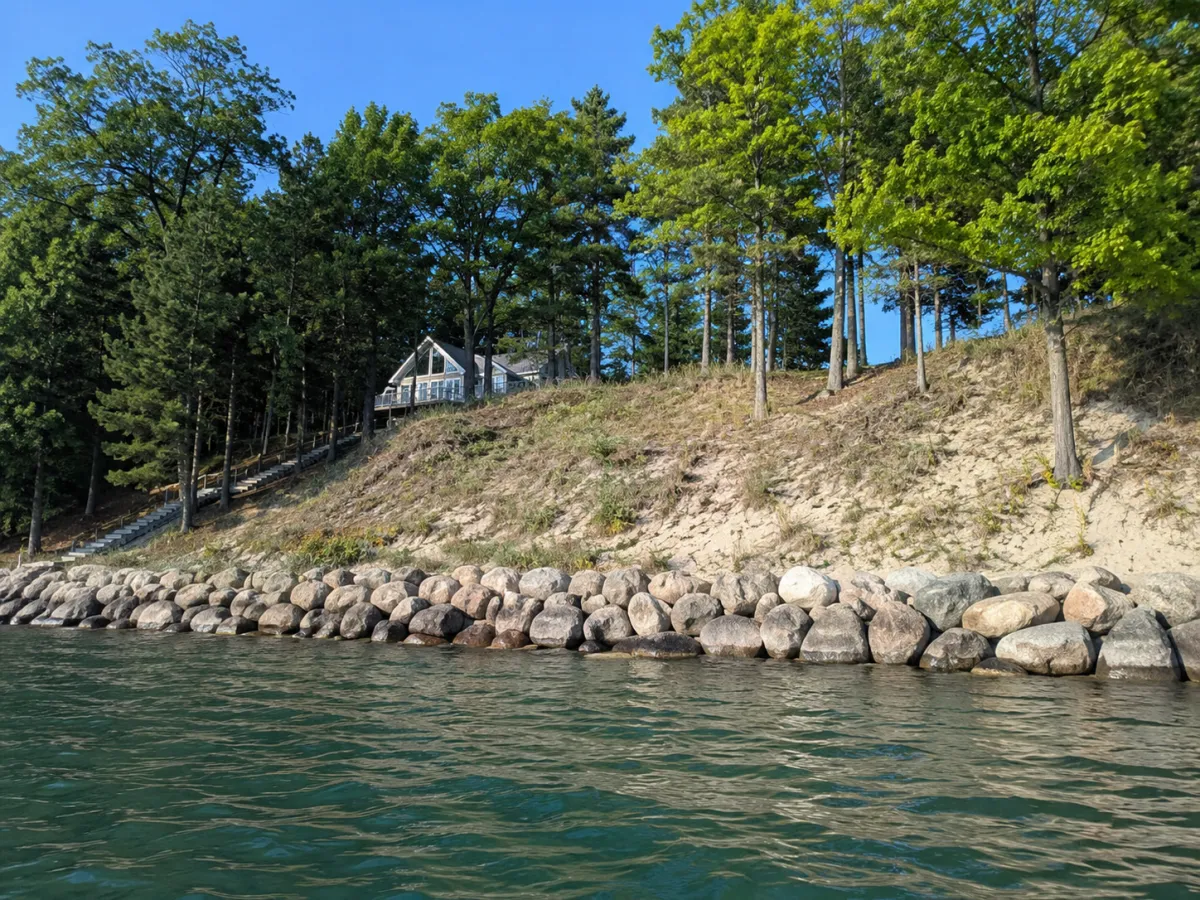
Frontage is the whole point of a lake home, and holding that frontage in place is an ongoing cost. Steel and vinyl seawalls have a service life, riprap and natural shorelines shift, and White Lake's water levels and ice movement work on that edge every winter. Replacing a failing seawall is one of the largest capital costs a waterfront owner faces, and it is not optional once the bank starts to erode toward the house. Smart buyers ask the age and condition of the shoreline structure the same way they ask about the roof, and they set aside a reserve for it. A generational lake home holds its value in part because someone funded that reserve instead of deferring it.
Docks, lifts, and the seasonal rhythm
Your dock and boat lift go in every spring and come out every fall, either with your own labor and a good pair of waders or with a service that charges for it. Add winter storage for the boat, shrink-wrap or indoor rack fees, and the annual dock and lift maintenance, and you have a real recurring number that a landlocked home simply does not have. None of it is shocking on its own. It adds up, and it is worth budgeting honestly rather than discovering in April.
Shoreline work means permits
Michigan protects its inland lakes, so meaningful work below or near the ordinary high water mark, new seawalls, dredging, or significant shoreline alteration, generally requires a permit through the state environmental agency (EGLE), sometimes with local review as well. That is a cost in both dollars and timeline. It is also a reason to buy a property whose shoreline structures are already permitted and in good standing, and to confirm that any recent work was done to code.
Well, septic, and what rural waterfront really means
Plenty of desirable White Lake frontage sits outside Whitehall and Montague city services, which means private well and septic rather than municipal water and sewer. That is normal here and nothing to fear, but it is a maintenance responsibility: septic inspections and pumping, eventual drain field work, and water testing. In Muskegon County a point-of-sale septic evaluation can come into play, so factor an inspection into any offer on a home that is not on city sewer.
Insurance sits higher on the water
Waterfront means water exposure, and that shows up in the premium. Some parcels near the lake, the channel, or the White River fall inside a FEMA flood zone, which can trigger a separate flood policy on top of your homeowners coverage. Wind and water proximity nudge the base premium up as well. Before you commit, confirm the flood zone for the exact parcel and get a real insurance quote, not a rule of thumb, because two homes a block apart can price very differently.
Lake stewardship is a shared, ongoing cost
White Lake has come a long way. It was designated a Great Lakes Area of Concern and was formally delisted in 2014 after a major cleanup, and keeping the lake healthy is part of what protects your investment. In practice that can mean special assessment districts or lake board contributions for things like invasive weed control and water quality monitoring, billed to shoreline owners. It is usually a modest annual figure, but it is a real one, and it is worth asking about for the specific bay you are considering.
The quiet ones: private roads, association dues, and upkeep
Many lake neighborhoods sit on private roads maintained by the owners who use them, so plowing and grading can be a shared annual bill. Some have associations with dues for a shared access, park, or boat launch. And waterfront homes simply take more upkeep, exterior finishes weather harder near the water, and the landscape between house and shoreline wants attention. None of this should scare you off. It should just be in the spreadsheet before you fall in love.
Why this list is good news, not bad news
Every cost above is knowable in advance. That is exactly the point. The buyers who get hurt on the lake are the ones who priced the house and ignored the ownership. The buyers who do well treat a waterfront home the way they would treat any investment-quality asset: they underwrite the carrying cost, fund the reserves, and buy the property whose frontage, systems, and permits are already in good order. That is the difference between a generalist and a specialist, and it is most of what I do before you ever sign. (Start here: what you need to know before buying a waterfront home on White Lake.)
Quick Recap
Taxes reset when you buy, and a second home pays Michigan's higher non-homestead rate. What the seller pays is not what you will pay.
The seawall is a major capital cost with a finite lifespan. Ask its age and fund a reserve.
Docks, lifts, boat storage, and winterization are real recurring seasonal costs a land home never has.
Well and septic, flood insurance, and shoreline permits (EGLE) all apply to specific parcels. Verify each before you offer.
Lake assessments, private roads, and higher upkeep round out the picture. Every one of these is knowable in advance if you buy with a specialist.
Custom HTML/CSS/JavaScriptCustom HTML/CSS/JavaScriptWhat to Read Next
What You Need to Know Before Buying a Waterfront Home on White Lake
What Are Riparian Rights in Michigan, and Why They Matter for White Lake Buyers
How Michigan Property Taxes Work for New Buyers (Especially If You're Moving From Out of State)
Tamara Hekkema is a licensed real estate agent and REALTOR with Greenridge Realty, serving White Lake, Whitehall, Montague, and the surrounding West Michigan lakeshore. She specializes in waterfront and second-home buyers and sellers, and she believes the right specialist saves you money long before closing. Have a specific White Lake property in mind? Send it over and she will break down the real carrying cost.